
BPC-157 and TB-500: A Comparative Analysis of Molecular Mechanisms in Research
The assumption that BPC-157 and TB-500 are interchangeable in a laboratory setting ignores the fundamental divergence in their molecular signaling pathways. Researchers frequently encounter significant ambiguity regarding sequence-specific interactions and inconsistent purity standards that can jeopardize the validity of experimental outcomes. It’s a common challenge to maintain rigorous control when standardized reconstitution protocols for bpc 157 and tb 500 remain elusive in many non-clinical resources. Maintaining scientific rigor requires an exacting understanding of how these specific peptide fragments interact with cellular environments as identified in research data current as of July 2026.
This article provides a comprehensive technical examination of the structural differences, synergistic potential, and precise laboratory handling requirements for these research compounds. You’ll gain a clear understanding of the divergent molecular pathways and the necessity of HPLC-verified materials for maintaining high-tier research integrity. We will outline standardized procedures for managing lyophilized peptides, detail the role of essential reagents like bacteriostatic water, and explore the scientific basis for their combined study within a controlled, professional environment.
Key Takeaways
- Differentiate the 15-amino acid pentadecapeptide structure of BPC-157 from the synthetic 43-amino acid protein fragment known as TB-500.
- Examine the unique biological mechanisms of bpc 157 and tb 500, contrasting nitric oxide system modulation with physical G-actin binding and cellular migration.
- Assess the synergistic potential of multi-pathway activation through the concurrent study of signal modulation and physical endothelial differentiation.
- Apply standardized laboratory protocols for peptide reconstitution using bacteriostatic water to prevent mechanical shear stress and ensure compound stability.
- Verify the integrity of research materials through rigorous HPLC and Mass Spectrometry standards to ensure uncompromising purity in investigative environments.
Structural Overview of BPC-157 and TB-500 Peptides
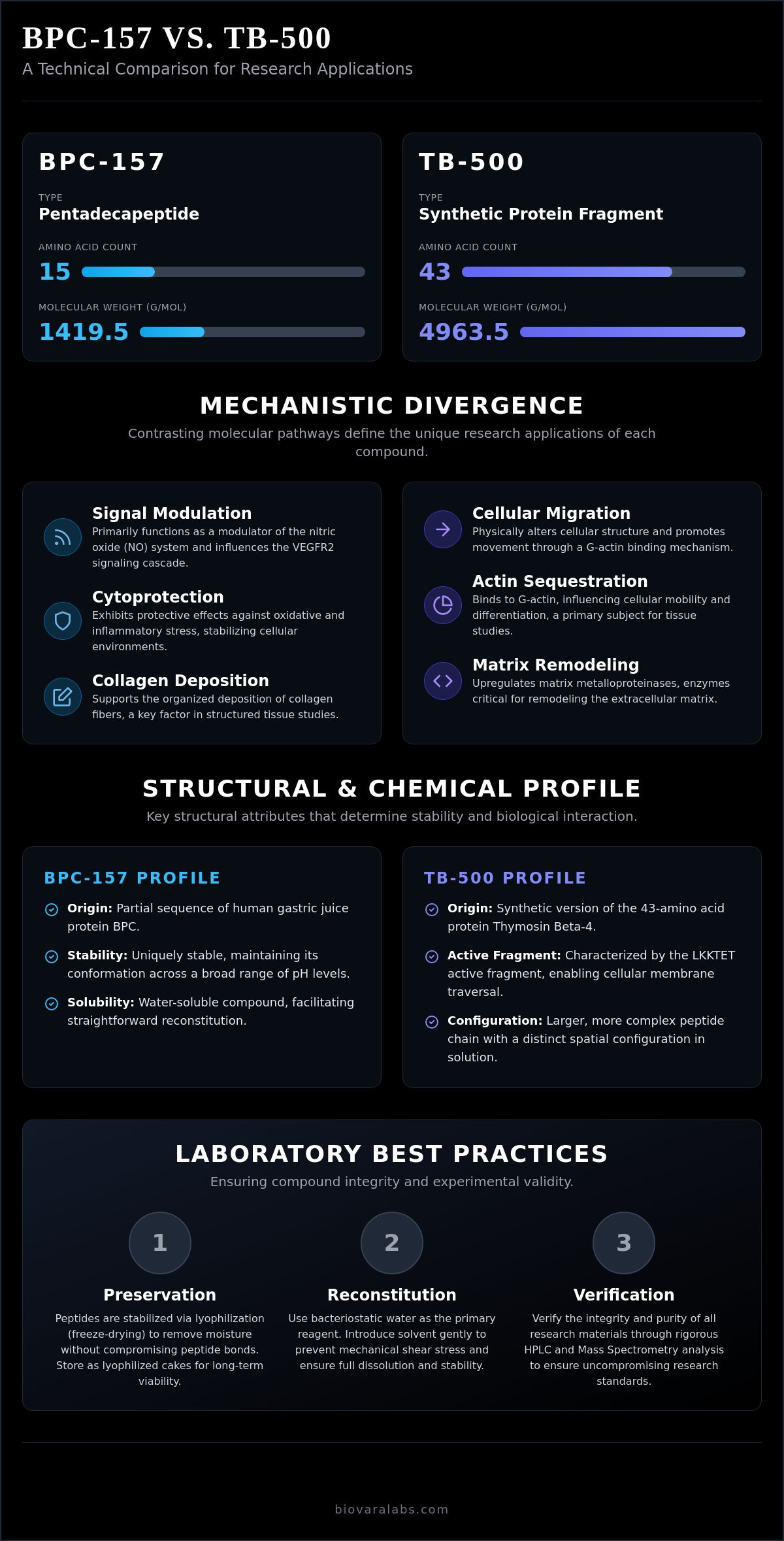
The molecular architecture of research peptides dictates their biological utility and experimental stability. BPC-157 is defined as a 15-amino acid pentadecapeptide, specifically L-Valyl-L-alpha-aspartyl-L-prolyl-L-prolyl-L-prolyl-glycyl-L-lysyl-L-prolyl-L-alanyl-L-alpha-aspartyl-L-alpha-aspartyl-L-alanyl-glycyl-L-leucyl-L-valine. This sequence is a partial derivative of the human gastric juice protein BPC. Providing a Structural Overview of BPC-157 clarifies its status as a stable, water-soluble compound with a molecular weight of approximately 1419.5 g/mol.
TB-500 represents a synthetic version of the naturally occurring 43-amino acid protein Thymosin Beta-4. It possesses a significantly larger molecular weight of approximately 4963.5 g/mol, reflecting its more complex peptide chain. The structural divergence between bpc 157 and tb 500 is most evident in their amino acid counts and consequent spatial configurations within an aqueous solution. While one is a compact signaling fragment, the other is a larger protein derivative designed for specific binding interactions.
Preserving the structural integrity of these specific sequences requires meticulous manufacturing processes. Lyophilization, or freeze-drying, is the standard method for stabilizing these compounds for transport and long-term storage. It's the most effective way to remove moisture without compromising the peptide bonds, ensuring that the lyophilized cakes remain viable for precise reconstitution in the laboratory environment. Without this process, the delicate amino acid chains would be susceptible to rapid hydrolysis and thermal degradation.
BPC-157: The Gastric Pentadecapeptide Sequence
BPC-157 exhibits a unique stability profile, maintaining its structural conformation across a broad range of pH levels. Unlike many standard peptides that degrade rapidly in acidic or basic environments, this pentadecapeptide remains resilient. This stability facilitates its primary research focus on cytoprotective signaling and multi-organoprotection in animal models. Its origin in gastric juice protein suggests a natural resistance to enzymatic breakdown; it's a critical variable in experimental design that researchers must account for when establishing baseline protocols.
TB-500: The Thymosin Beta-4 Derivative
TB-500 is characterized by the LKKTET active fragment, which is the sequence responsible for its biological activity. This specific motif enables the peptide to traverse cellular membranes effectively. In laboratory models, the focus remains on its role in actin sequestration and the promotion of angiogenesis. By binding to G-actin, it influences the physical migration of cells, a mechanism fundamentally distinct from the signaling modulation observed in smaller pentadecapeptides. This ability to sequester actin makes it a primary subject for studies involving cellular mobility and tissue differentiation.
Mechanistic Divergence: Signal Modulation vs. Cellular Migration
BPC-157 functions as a primary modulator of the nitric oxide (NO) system and growth factor expression. While BPC-157 influences the VEGFR2 pathway to trigger internal signaling cascades, TB-500 utilizes a G-actin binding mechanism to physically alter cellular structure and movement. This fundamental distinction defines the experimental utility of bpc 157 and tb 500 in laboratory models. TB-500 further facilitates the upregulation of matrix metalloproteinases, which are critical enzymes for the degradation and remodeling of the extracellular matrix. These compounds exhibit divergent roles in collagen synthesis; BPC-157 typically supports organized fiber deposition, whereas TB-500 focuses on the regulation of fibroblast organization and mobility during the early stages of tissue study.
Systemic Signaling and Cytoprotection (BPC-157)
The mechanism of action for BPC-157 involves the upregulation of growth hormone receptors in fibroblasts, which increases the sensitivity of these cells to growth-promoting ligands. In the context of Mechanistic Divergence: Signal Modulation, this peptide demonstrates a profound ability to stabilize the cellular environment against oxidative and inflammatory stress. Neurological research has identified specific interactions with serotonergic and dopaminergic systems, suggesting a broader systemic influence than localized repair. Its modulation of inflammatory cytokines like TNF-alpha and IL-6 allows researchers to study complex immune responses in various tissue models. Researchers don't often find such a robust stability profile in other pentadecapeptides. It's vital to use compounds that maintain high stability; Biovara Labs provides HPLC-verified research peptides that meet these exacting standards for clinical-grade investigation.
Actin Sequestration and Angiogenesis (TB-500)
TB-500 operates through the biochemical process of G-actin sequestration. By binding to monomeric actin, it maintains a pool of building blocks necessary for rapid cell motility. This movement is essential for endothelial cell differentiation and the formation of vascular tubes during the study of angiogenesis. Unlike BPC-157, which focuses on signal transduction, TB-500 physically enables cells to migrate to the site of interest. The compound doesn't just bind actin; it sequesters it to facilitate fluid movement. It also plays a significant role in reducing myofibroblast differentiation. This specific action is studied to minimize the formation of fibrotic tissue, ensuring that new cellular growth in the model remains functional rather than obstructive. The ability of TB-500 to traverse cellular membranes makes it an ideal subject for examining intracellular actin dynamics.
Investigating Synergistic Interactions in Laboratory Models
The theory of multi-pathway activation proposes that combining signaling modulation with physical cell migration yields more comprehensive results in tissue models. While BPC-157 triggers internal signaling cascades through growth factor upregulation, TB-500 provides the physical mobility required for those signals to manifest at a cellular level. This concurrent application of bpc 157 and tb 500 allows researchers to examine how systemic signaling interacts with localized cellular movement. Accelerated angiogenesis is a primary area of interest; it occurs when the upregulation of Vascular Endothelial Growth Factor (VEGF) from one compound meets the endothelial cell differentiation promoted by the other. This creates a robust framework for studying vascularization in ischemic or damaged tissue environments.
The Glow Stack serves as a specialized research tool for investigating these multi-peptide interactions. It enables the systematic study of how divergent molecular pathways intersect within the same biological model. Researchers use this curated combination to observe the cumulative effects of signal transduction and actin sequestration without the variability introduced by sourcing compounds from disparate manufacturers. This structured approach is essential for maintaining the integrity of data when examining complex musculoskeletal or neurological systems where multiple biological processes occur simultaneously.
Connective Tissue and Musculoskeletal Research
Studies on connective tissue models demonstrate synergistic effects on tenocyte proliferation and migration. The interaction between these peptides influences the rate of collagen type I versus type III deposition, a critical metric in understanding tissue organization. Type I collagen provides structural tensile strength, while type III is often associated with early, less organized repair phases. By modulating these ratios, researchers can observe how specific sequences impact the maturation of the extracellular matrix. Maintaining these exacting standards requires high-purity materials; consult Research Peptides Australia: Scientific Sourcing Standards for detailed protocols on analytical verification and sourcing.
Neurological and Gastrointestinal Synergy
The gut-brain axis represents another significant area for studying peptide synergy. BPC-157’s established influence on gastrointestinal cytoprotection is often studied alongside TB-500’s potential for neuroprotection and cell survival. Research parameters frequently focus on blood-brain barrier permeability, examining how these fragments might traverse or influence vascular integrity within the central nervous system. In ischemic models, the combination allows for an analysis of how tissue repair signals and physical cell migration work to stabilize cellular environments post-insult. This multi-layered approach provides a more comprehensive view of systemic homeostasis than the study of isolated compounds; for those examining physical methods of supporting these processes, iceologycoldplunge.com offers specialized equipment for cold-induced recovery and wellness.
Standardized Protocols for Peptide Reconstitution and Handling
Precision in laboratory research depends entirely on the physical integrity of the compounds under study. Reconstitution is the most vulnerable phase for the amino acid sequences, as improper technique can lead to the irreversible denaturation of the peptide structure. Standardized handling of bpc 157 and tb 500 requires a controlled environment and the use of analytical-grade reagents to ensure that the molecular pathways remain viable for investigation. Deviating from established laboratory protocols introduces variables that can compromise the reproducibility of experimental data.
Reconstitution with Bacteriostatic Water
Analytical grade reagents are mandatory for maintaining a sterile research environment. Bacteriostatic water, which contains 0.9% benzyl alcohol, serves as the primary diluent for multi-use research vials. This specific concentration of benzyl alcohol is essential for inhibiting microbial proliferation, ensuring the sample remains uncontaminated throughout the duration of the study. Using sterile water without a bacteriostatic agent increases the risk of rapid bacterial growth once the vial's vacuum seal is compromised.
Calculating precise concentrations is a fundamental requirement for accurate laboratory measurement. Researchers typically follow a mass-per-volume formula to establish mg/mL ratios. For a 5mg vial of lyophilized peptide, introducing 2.0mL of diluent results in a concentration of 2.5mg/mL. In contrast, a 10mg vial reconstituted with the same 2.0mL volume yields a concentration of 5.0mg/mL. It's critical to introduce the diluent slowly, allowing the liquid to flow down the interior glass wall. This method prevents mechanical shear stress on the peptide cake, which can occur if the liquid is sprayed directly onto the compound. Shaking the vial must be avoided; a gentle swirling motion is the only acceptable technique for facilitating complete dissolution.
Stability and Degradation Prevention
Peptide secondary structures are highly sensitive to environmental stressors like UV light and thermal fluctuations. Lyophilized peptides are most stable when stored at -20°C, a temperature that preserves the structural conformation for extended periods. Once a compound like the BPC-157 Research Peptide or TB-500 Research Peptide has been transitioned to an aqueous state, its stability window narrows significantly. Reconstituted peptides must be stored in a refrigerated environment between 2-8°C to minimize the rate of hydrolytic degradation.
Exposure to direct light or excessive agitation can lead to the breakdown of the delicate amino acid chains. Short-term stability for reconstituted sequences typically remains reliable for 14 to 28 days when maintained at optimal temperatures. Beyond this timeframe, the risk of peptide fragments losing their biological activity increases. Maintaining these rigorous standards is only possible when starting with high-purity materials and verified reagents. Researchers can secure the necessary components for these protocols by sourcing analytical grade Bacteriostatic Water and HPLC-verified research peptides to ensure uncompromising experimental accuracy.
Procurement Standards for High-Purity Research Compounds in Australia
Reliable investigative data depends on the acquisition of materials that meet exacting analytical standards. Procurement of bpc 157 and tb 500 within the Australian scientific community requires a disciplined approach to supply chain verification. High-Performance Liquid Chromatography (HPLC) and Mass Spectrometry are the primary tools used to confirm the identity and concentration of these sequences. National distribution logistics must ensure that these materials reach their destination without thermal degradation, maintaining the stability established during the lyophilization process. A reliable supply chain isn't just about speed; it's about the consistent application of quality control metrics from the manufacturing laboratory to the end-researcher's facility.
Analytical Verification and Purity Metrics
The Certificate of Analysis (CoA) serves as the definitive record of a compound's integrity. For analytical laboratory investigation, a purity level of ≥98% is the established benchmark. This threshold ensures that trace impurities don't interfere with the biological pathways being studied. Mass Spectrometry provides a precise molecular weight map, confirming that the 15-amino acid sequence of BPC-157 or the 43-amino acid chain of TB-500 matches the intended specification. Biovara Labs maintains these rigorous standards by providing HPLC-verified research compounds, ensuring that every batch meets the requirements for high-tier scientific inquiry. These metrics are essential for researchers who require absolute certainty before proceeding with complex experimental models.
Compliance and Ethical Research Standards
Adherence to "Research Use Only" (RUO) designations is a mandatory requirement for laboratory compliance. These compounds are strictly prohibited for human consumption or therapeutic use. In Australia, BPC-157 and TB-500 are classified as Schedule 4 substances; their availability as research chemicals is intended solely for in-vitro or animal models within a controlled environment. Online procurement doesn't bypass these regulatory frameworks, and maintaining the integrity of the Australian scientific research community requires a clear distinction between experimental study and clinical application. It's the responsibility of the investigator to ensure that all laboratory handling protocols are followed according to institutional and national guidelines.
While researchers must strictly adhere to laboratory protocols, the clinical application of regenerative medicine for pain management represents a distinct field of practice; for those interested in such therapeutic services, you can discover REVĪV, which specializes in mobile concierge care for spine and joint health.
Researchers looking to advance their understanding of peptide synergy can transition from isolated studies to multi-compound investigations using specialized tools like the Glow Stack. This provides a curated framework for examining complex biological interactions while maintaining the same analytical standards as individual compounds. Establishing a supply chain with a provider that prioritizes these clinical-grade metrics is the final step in ensuring the validity of your research outcomes. By sourcing high-purity materials and essential reagents like Bacteriostatic Water from a single, verified source, you minimize the variables that can compromise your data's reproducibility.
Advancing Experimental Precision in Peptide Research
The structural divergence between bpc 157 and tb 500 dictates their unique utility in laboratory models. While one modulates systemic signaling and cytoprotection through the nitric oxide system, the other facilitates localized cellular migration via actin sequestration. Understanding these distinct molecular pathways allows researchers to construct sophisticated experimental frameworks that investigate the synergistic potential of multi-peptide interactions. Success in these investigations depends on the consistent application of standardized handling protocols and the use of analytical-grade reagents. Maintaining the integrity of your data requires uncompromising standards in both compound procurement and reconstitution methodology.
Biovara Labs supports the Australian scientific community by providing clinical-grade materials designed for exacting laboratory standards. Every batch undergoes HPLC verification to ensure a purity benchmark of ≥98%, ensuring the reproducibility of your investigative outcomes. With reliable national Australian shipping and specialized reagents like bacteriostatic water, you can maintain the highest level of professional trust in your results. Explore high-purity BPC-157 and TB-500 research peptides at Biovara Labs to secure the precise materials required for your next phase of discovery. We're committed to providing the technical reliability your research demands.
Research Specifications and Frequently Asked Questions
What is the primary difference between BPC-157 and TB-500 sequences?
BPC-157 is a 15-amino acid pentadecapeptide, while TB-500 is a synthetic version of the 43-amino acid protein Thymosin Beta-4. This structural variance results in significantly different molecular weights and biological pathways. BPC-157 primarily modulates signaling systems like nitric oxide, whereas the larger TB-500 sequence focuses on actin binding and physical cellular mobility.
Can BPC-157 and TB-500 be reconstituted in the same vial for study?
Reconstituting different peptides in the same vial is generally discouraged in controlled research environments. Mixing compounds can lead to unpredictable intermolecular interactions or cross-degradation that compromises experimental integrity. Standard laboratory practice requires individual reconstitution to maintain precise concentration control and ensure the stability of each specific amino acid sequence during the investigation.
Why is bacteriostatic water preferred over sterile water for peptide research?
Bacteriostatic water is preferred because it contains 0.9% benzyl alcohol, which inhibits microbial growth in multi-use vials. Sterile water lacks this preservative; it's susceptible to rapid contamination once the vacuum seal is punctured. For long-term studies involving bpc 157 and tb 500, maintaining a sterile environment is critical for the validity and reproducibility of the research data.
What are the optimal storage conditions for BPC-157 and TB-500 research peptides?
Lyophilized peptides should be stored at -20°C for long-term stability and protection against thermal degradation. Once reconstituted, these compounds must be kept in a refrigerated environment between 2-8°C. Protecting the vials from direct UV light and avoiding mechanical agitation are also essential for preserving the secondary structure of the delicate amino acid chains.
How is the purity of research peptides verified in Australia?
Purity is verified through High-Performance Liquid Chromatography (HPLC) and Mass Spectrometry (MS) to confirm the amino acid sequence identity. These analytical methods ensure the absence of manufacturing byproducts or contaminants. In Australia, reputable suppliers provide a Certificate of Analysis (CoA) for each batch to document that the material meets the ≥98% purity benchmark required for rigorous scientific investigation.
Are BPC-157 and TB-500 compounds intended for human consumption?
No, these compounds are strictly designated for "Research Use Only" and aren't intended for human consumption or therapeutic application. Sourcing bpc 157 and tb 500 for non-laboratory use violates the legal and ethical framework established for scientific materials. Researchers must adhere to institutional guidelines that restrict these peptides to in-vitro or animal models within a professional setting.
What is the standard shelf life of a lyophilized research peptide?
Lyophilized research peptides typically maintain their structural integrity for up to 24 months when stored at -20°C. If kept at room temperature, the shelf life reduces significantly to approximately 90 to 180 days due to potential thermal degradation. It's standard practice to verify the manufacturing date and storage history to ensure the compound's viability for precise experimental use.
How does the molecular weight of TB-500 affect its research application?
The higher molecular weight of TB-500, approximately 4963.5 g/mol, influences its ability to sequester actin and traverse cellular membranes. Its larger size compared to smaller pentadecapeptides allows for more complex binding interactions necessary for endothelial cell differentiation. This physical characteristic makes it a primary subject for studies focusing on macro-level cellular migration rather than simple signal transduction cascades.


