
TB-500 Research Peptide Australia: A Technical Reference Guide (2026)
The distinction between the full-length Thymosin Beta-4 protein and the synthetic TB-500 fragment is the most critical technical variable in modern cellular repair models. Researchers utilizing the TB-500 research peptide Australia market often encounter a lack of transparency regarding molecular purity and the specific HPLC verification necessary for rigorous laboratory work. It's understood that inconsistent chemical states in imported materials can compromise the integrity of an entire study's longitudinal data.
This technical reference guide delivers a comprehensive scientific overview of the peptide's molecular sequence and its role in G-actin sequestering. You'll gain a precise understanding of the mechanisms that drive cellular migration and tissue regeneration within controlled environments. We'll also establish standardized protocols for reconstitution using bacteriostatic water and long-term storage to ensure chemical stability.
Finally, the article outlines the current 2026 regulatory framework and supply chain for sourcing analytical-grade materials domestically. By the end of this guide, you'll have the technical framework required to maintain exacting standards in your laboratory, from initial handling to the final analysis of cellular repair models.
Key Takeaways
- Identify the precise molecular identity of the TB-500 fragment (Ac-SDKP) to differentiate its chemical formula and weight from full-length Thymosin Beta-4.
- Understand the G-actin sequestering mechanism and how it regulates cellular structural dynamics and migration within biological research models.
- Evaluate the primary applications of this peptide in investigating the repair kinetics of connective and muscle tissue simulations.
- Implement standardized laboratory protocols for the reconstitution and storage of TB-500 research peptide Australia to maintain long-term molecular stability.
- Establish a verification framework for analytical-grade purity by utilizing HPLC standards and batch-specific Certificates of Analysis (CoA).
Understanding the TB-500 Molecular Sequence (Ac-SDKP)
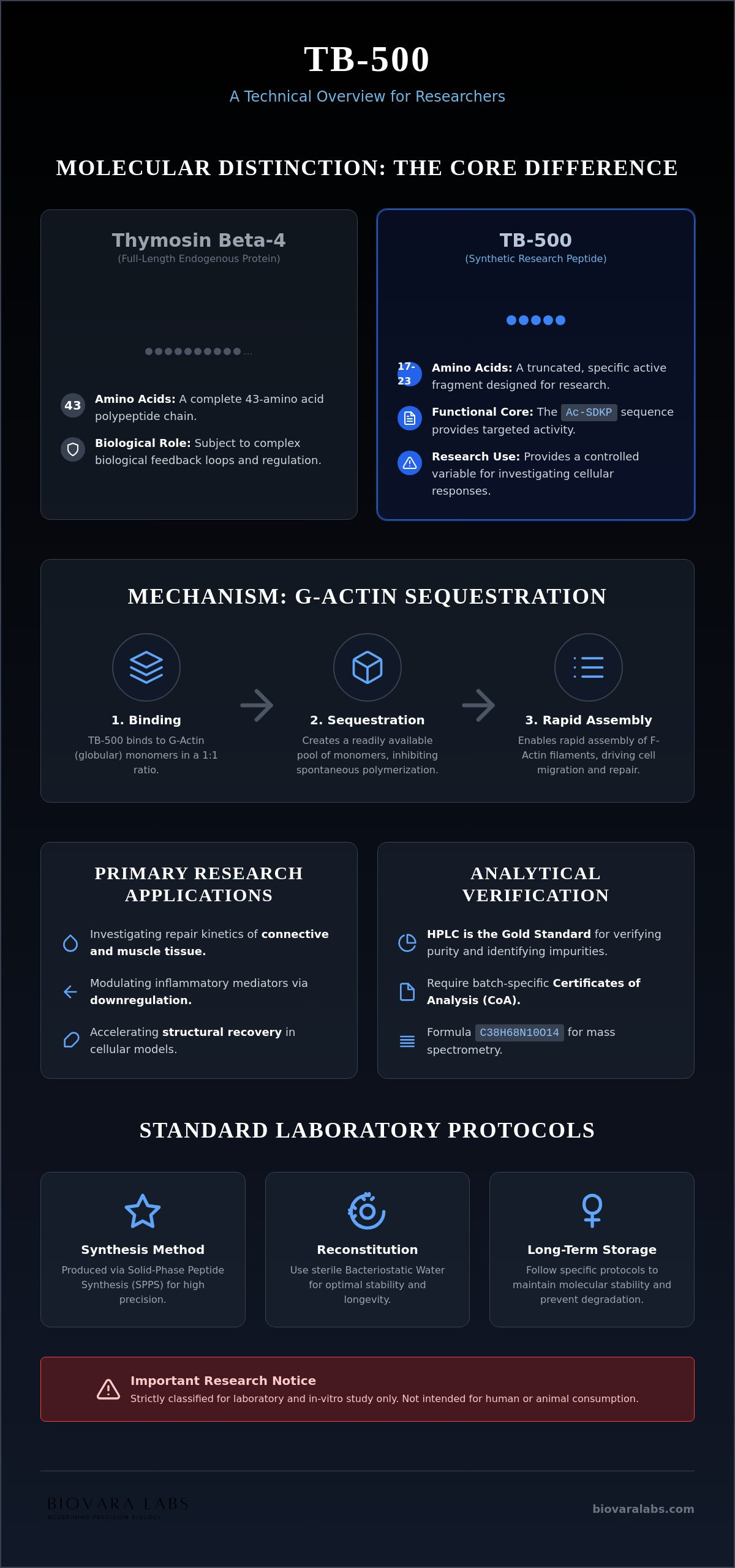
TB-500 is a synthetic peptide fragment representing a specific domain of the parent protein Thymosin beta-4. It isn't the full protein. Instead, it's a truncated 17-23 amino acid sequence designed for targeted research applications. This exogenous compound is specifically manufactured to replicate the biological activity of the endogenous protein without the complexities of the entire 43-amino acid chain. The distinction is vital for researchers who require a high degree of specificity in their cellular repair models. All TB-500 research peptide Australia supplies are strictly classified for laboratory research and in-vitro study only. They aren't intended for human or animal consumption.
The molecular weight and chemical formula (C38H68N10O14) serve as the primary identifiers for laboratory verification. These specifications allow for precise mass spectrometry analysis to ensure the compound's identity matches the intended molecular profile. Distinguishing between the endogenous protein and the exogenous fragment is necessary for accurate data interpretation. Endogenous levels are subject to biological feedback loops, whereas exogenous TB-500 provides a controlled variable for investigating actin-mediated cellular responses.
The Role of the Ac-SDKP Sequence in Research
The N-terminal acetylated tetrapeptide sequence, Ac-SDKP, is the functional core of the TB-500 fragment. This specific sequence allows the peptide to retain the biological activity of the full-length protein, particularly regarding its interaction with G-actin. Structural integrity is paramount in research environments. If the acetylation at the N-terminal is missing or compromised, the peptide's ability to sequester actin is significantly diminished. Maintaining this exact sequence length and modification ensures that the TB-500 research peptide Australia yields consistent results across different experimental batches. It's this sequence that drives the upregulation of cellular migration and tissue structural dynamics in controlled models.
Synthetic Synthesis and Purity Standards
Production of high-tier TB-500 relies on solid-phase peptide synthesis (SPPS). This methodical approach adds amino acids sequentially to a resin-bound chain, ensuring the resulting peptide matches the desired 17-23 amino acid length with high precision. High-Performance Liquid Chromatography (HPLC) is the gold standard for verifying the final purity of the compound. It identifies any truncated sequences or residual reagents that could compromise laboratory data. Adhering to these rigorous research peptides Australia standards is the only way to guarantee that the chemical state of the vial matches the technical specifications required for peer-reviewed investigation. Without HPLC verification, the risk of experimental interference from impurities remains unacceptably high.
Molecular Mechanism of Action in Biological Models
TB-500's primary biological utility is centered on its capacity to sequester G-actin (globular actin). In high-purity laboratory environments, such as those utilizing TB-500 research peptide Australia, this interaction is fundamental to observing cellular structural dynamics. By binding to G-actin in a 1:1 ratio, the peptide inhibits spontaneous actin polymerisation while simultaneously maintaining a readily available pool of monomers. This reservoir is critical for the rapid assembly of F-actin (filamentous actin) when the cell receives specific migration signals. The resulting upregulation of actin polymerisation allows for precise control over the mechanical forces required for cellular movement.
Beyond actin dynamics, the peptide modulates inflammatory mediators and cytokines. Research models indicate a downregulation of specific pro-inflammatory markers, which suggests a mechanism for reducing oxidative stress in tissue repair simulations. This modulation creates a microenvironment conducive to accelerated structural recovery, particularly in models focusing on acute cellular damage and ischaemic conditions. Ensuring the precision of these biological observations requires materials of verified purity, such as the analytical-grade TB-500 Research Peptide available for laboratory investigation.
Actin-Binding and Cell Migration
The conversion of G-actin to F-actin is the engine of cell motility. TB-500 facilitates this "treadmilling" process, where actin filaments lengthen at the leading edge of the cell, pushing the membrane forward. In wound-healing assays, this mechanism directly influences the migration speed of fibroblasts and endothelial cells. For researchers investigating connective tissue kinetics, understanding this mechanical shift is essential for quantifying the rate of gap closure in damaged tissue simulations. The ability of the peptide to promote cell motility without altering the genetic profile of the cell makes it a unique tool for studying physical repair mechanisms.
Angiogenesis and Vascular Endothelial Growth Factor (VEGF)
Angiogenesis, or the formation of new blood vessels, is a hallmark of TB-500's activity in ischaemic research models. The peptide interacts with vascular formation pathways, often leading to an increased expression of Vascular Endothelial Growth Factor (VEGF). Laboratory data from endothelial cell cultures frequently show the formation of capillary-like tubes when exposed to the peptide. This attribute is particularly significant for studying tissues with naturally poor blood supply, such as tendons and ligaments, where vascularisation is often the limiting factor in repair kinetics. By promoting these vascular pathways, TB-500 research peptide Australia provides a robust model for investigating revascularisation in compromised biological environments.
Primary Research Applications for TB-500
TB-500 is utilized across diverse biological disciplines to observe tissue-specific responses in controlled injury models. Its systemic distribution profile makes it a primary candidate for investigating recovery kinetics in complex physiological systems. Researchers employing TB-500 research peptide Australia focus on the compound's ability to influence the transition from acute inflammatory states to the proliferative phase of repair. This transition is essential for maintaining cellular homeostasis and preventing the formation of excessive fibrotic tissue.
The scope of current investigation includes several critical investigative areas:
- Connective Tissue Kinetics: Evaluating the rate of fibroblast migration and collagen matrix assembly in tendons and ligaments.
- Myogenic Regeneration: Studying the repair of skeletal muscle fibers in models of mechanical strain and partial thickness tears.
- Dermal Repair: Analyzing the speed of epithelialization and wound closure in various cutaneous injury simulations.
- Chronic Inflammatory Modulation: Investigating the peptide's role in suppressing pro-inflammatory cytokines that otherwise delay the resolution of the repair cycle.
Tendon and Ligament Repair Models
Connective tissue research presents unique challenges due to the inherent low vascularity of these structures. TB-500 provides a robust model for investigating how exogenous peptides might overcome these biological bottlenecks. Research focuses heavily on the peptide's impact on collagen deposition and orientation. In animal models, quantitative analysis often measures the recovery of tensile strength and the restoration of the extracellular matrix. By observing the alignment of new collagen fibers, scientists can determine if the peptide facilitates a more organized structural recovery compared to untreated control groups. This data is vital for understanding the long-term mechanical integrity of repaired connective structures.
Comparative Research: TB-500 vs. BPC-157
A significant area of modern investigation involves differentiating the systemic effects of TB-500 from the more localized action often associated with BPC-157. While BPC-157 is frequently studied for its site-specific angiogenic and cytoprotective properties, TB-500 is valued for its ability to migrate through the circulatory system to reach distant or diffuse injury sites. This systemic reach is the primary rationale for combined "stack" research in complex injury models where multiple tissue types are compromised. Researchers often utilize the Glow Stack as a curated combination for studying the synergistic interaction between these two distinct pathways. Combining these compounds allows for the simultaneous observation of localized repair signaling and systemic actin-mediated cell motility. This dual-pathway approach provides a more comprehensive view of biological repair mechanisms than the study of either peptide in isolation. Utilizing TB-500 research peptide Australia within these combined protocols ensures that the systemic variables are controlled with analytical-grade precision.
Handling, Reconstitution, and Stability Protocols
Proper handling of TB-500 research peptide Australia is essential to prevent premature molecular degradation. The Australian climate, characterized by high ambient temperatures, poses a significant risk to the cold chain during transit and laboratory storage. Researchers must account for these environmental variables to ensure the peptide's primary sequence remains intact. Failure to maintain strict temperature control can lead to deamidation or oxidation, rendering the resulting experimental data invalid. Protecting the molecular integrity of the compound requires a disciplined approach to both physical handling and environmental monitoring.
The peptide's stability is also highly dependent on its physical state. Lyophilised powder is significantly more resilient than the reconstituted liquid, but both forms remain sensitive to light and moisture. Laboratory protocols should mandate that vials are stored in a dark, desiccated environment to prevent photochemical reactions or hydrolysis. Maintaining these standards ensures that the chemical formula remains consistent throughout the duration of a longitudinal study.
Step-by-Step Reconstitution for Researchers
Reconstitution is the most critical phase of preparation. For multi-use laboratory vials, Bacteriostatic Water is the preferred solvent due to its antimicrobial properties, which extend the solution's shelf life compared to sterile saline. Calculating the concentration (mg/mL) requires precise measurement of the solvent volume. For instance, adding 2mL of solvent to a 10mg vial yields a concentration of 5mg/mL. During this process, the solvent should be dripped slowly down the internal wall of the vial. Researchers must use a gentle swirling motion rather than vigorous agitation. Vigorous shaking causes peptide shearing, a mechanical disruption of the molecular bonds that destroys the peptide's biological activity and compromises the TB-500 research peptide Australia sample.
Long-term Storage and Degradation Variables
Lyophilised TB-500 offers the highest degree of stability when stored at -20°C, maintaining its integrity for up to 24 months. If stored at 4°C, this stability is reduced to approximately 3 to 6 months. Once reconstituted, the peptide is far more fragile and should be stored at 2-8°C for no longer than 10 days for optimal experimental results. Repeated freeze-thaw cycles must be avoided because they induce structural stress on the amino acid chain; instead, researchers should aliquot the solution into single-use experimental doses. Peptide degradation occurs rapidly when exposed to temperatures exceeding 37°C for extended periods. This thermal sensitivity necessitates a reliable refrigeration system and a documented log of temperature fluctuations within the laboratory environment.
Sourcing TB-500 Research Peptide in Australia
Sourcing TB-500 research peptide Australia requires more than identifying a supplier; it necessitates a rigorous evaluation of analytical verification protocols. For researchers, the primary risk in procurement is the lack of batch-specific data. Every vial introduced into a laboratory environment must be accompanied by a Certificate of Analysis (CoA) that correlates directly to the current batch number. This documentation serves as the only definitive proof of molecular identity and purity. Sourcing from domestic Australian suppliers is a strategic necessity to minimize transit times. As established in the previous section, maintaining the cold chain is critical. International shipping introduces uncontrolled variables that can lead to thermal degradation before the material even reaches the laboratory.
Procurement logistics for high-concentration research compounds demand a disciplined approach to inventory management. Compliance with "Research Use Only" labels isn't merely a legal formality; it's a standard that ensures the material has been manufactured under laboratory-grade conditions rather than consumer-retail environments. This distinction is vital for maintaining the integrity of in-vitro and in-vivo models where even trace contaminants can alter cytokine expression or cellular migration rates. Domestic sourcing ensures that the journey from the controlled storage facility to the laboratory bench is as short and stable as possible.
Analytical Standards and HPLC Verification
Valid scientific investigation depends on a minimum purity threshold of ≥98%. Mass spectrometry data provides the molecular weight profile required to confirm the Ac-SDKP sequence, while HPLC (High-Performance Liquid Chromatography) identifies the presence of any residual reagents or truncated peptide sequences. Interpreting a chromatogram involves analyzing the primary peak area relative to baseline noise. Any significant secondary peaks indicate impurities that could interfere with cellular repair models. These rigorous procurement standards are explored further in our guide on NAD+ peptide laboratory supply, which details the analytical benchmarks required for 2026 research.
Biovara Labs: Precision Sourcing for 2026
Biovara Labs operates as a dedicated provider of analytical-grade research materials, strictly adhering to professional laboratory standards. Our inventory includes 10mg TB-500 vials and the specialized reagents, such as bacteriostatic water, required for precise reconstitution. By maintaining a domestic supply chain, we eliminate the stability risks associated with long-haul international transit. Our shipping protocols are designed to protect the molecular integrity of every compound, ensuring that the material arrives in a stable, lyophilised state across all Australian states. This commitment to precision allows researchers to focus on data acquisition rather than questioning the chemical state of their materials. Secure high-purity TB-500 for your 2026 research projects to ensure your laboratory investigation meets the highest global standards for purity and stability.
Advancing Analytical Standards in Cellular Repair Research
The successful investigation of cellular migration and tissue regeneration depends entirely on the chemical integrity of the materials utilized. Maintaining a precise understanding of the Ac-SDKP sequence and the G-actin sequestering mechanism ensures that laboratory models yield reproducible data. It's critical to adhere to the established cold-chain and reconstitution protocols discussed to avoid the structural degradation that compromises complex biological simulations. Sourcing a high-purity TB-500 research peptide Australia through domestic channels remains the most effective method for mitigating transit-related risks and ensuring batch-to-batch consistency.
Biovara Labs provides the analytical foundations required for sophisticated experimental work. Our commitment to quality is evidenced by verified HPLC/MS purity certificates and a supply chain dedicated strictly to research-grade compounds. By utilizing reliable domestic Australian shipping, we ensure that your materials arrive in their optimal chemical state. Precision in procurement is the first step toward precision in discovery. Procure High-Purity TB-500 for Laboratory Research and elevate the technical rigor of your 2026 projects. We look forward to supporting your next breakthrough in the field of peptide science.
Frequently Asked Questions
What is the specific CAS number for TB-500 research peptides?
The specific CAS number for the TB-500 research peptide is 77591-33-4. This identifier is essential for laboratory cataloging and ensures the molecular identity of the synthetic fragment matches established chemical databases. In the context of TB-500 research peptide Australia, researchers use this number to verify they are working with the correct 17-23 amino acid sequence rather than the full-length protein. Accurate identification is the first step in maintaining experimental validity.
How should TB-500 be stored to prevent molecular degradation?
Lyophilised TB-500 should be stored at -20°C for long-term stability or 4°C for short-term use. Once the peptide is reconstituted, it must be refrigerated at 2-8°C and used within approximately 10 days to prevent molecular degradation. Exposure to light and moisture must be strictly controlled by using amber vials or dark storage environments. These protocols protect the peptide's primary sequence from deamidation and oxidation during the course of a study.
Is TB-500 the same as Thymosin Beta-4 in a research context?
TB-500 is a synthetic fragment and isn't identical to the full-length Thymosin Beta-4 protein. While the endogenous protein consists of 43 amino acids, TB-500 typically represents the 17-23 amino acid segment containing the Ac-SDKP sequence. This fragment is specifically synthesized for research because it retains the actin-sequestering properties of the parent protein. Distinguishing between these two compounds is necessary for researchers to accurately quantify biological responses in cellular repair models.
What is the recommended reconstitution solvent for TB-500 laboratory study?
Bacteriostatic water is the recommended solvent for reconstituting TB-500 in multi-use laboratory vials. The inclusion of 0.9% benzyl alcohol serves as an effective antimicrobial agent, extending the solution's stability compared to sterile saline. While sterile water may be used for single-use applications, it lacks the preservative properties required for experiments spanning multiple days. Precise solvent measurement is necessary to achieve the specific mg/mL concentration required for accurate dosing in research protocols.
Can TB-500 and BPC-157 be studied together in the same research model?
TB-500 and BPC-157 are frequently studied together in complex injury models to analyze their synergistic repair mechanisms. This combination, often referred to as a "stack" in research contexts, allows scientists to observe the interaction between systemic actin-mediated motility and localized angiogenic signaling. Studying these peptides in tandem provides a broader overview of tissue regeneration kinetics than observing either compound in isolation. TB-500 research peptide Australia supplies often include these as paired reagents for dual-pathway investigations.
What purity level is required for TB-500 to be considered research-grade?
A minimum purity threshold of ≥98% is required for a compound to be classified as research-grade. This level of purity ensures that the observed biological effects are attributable to the peptide sequence itself rather than residual reagents or truncated fragments. Every batch should be verified using High-Performance Liquid Chromatography (HPLC) and Mass Spectrometry (MS). Analytical-grade materials are essential for producing peer-reviewed data that meets international standards for scientific rigor and reproducibility.
How does the Australian climate affect the shipping of lyophilised peptides?
The Australian climate presents significant thermal challenges that can accelerate the degradation of lyophilised peptides during transit. High ambient temperatures, particularly during summer months, necessitate a robust cold-chain protocol or rapid domestic shipping to minimize environmental exposure. Sourcing materials from domestic providers reduces the time the peptide spends in uncontrolled logistics environments. This localized approach is the most reliable method for ensuring the molecular integrity of the compound upon arrival at the laboratory.
Is TB-500 approved for human consumption in Australia?
TB-500 is not approved for human consumption or therapeutic use by the Therapeutic Goods Administration (TGA) in Australia. It's strictly classified as a research chemical intended for laboratory investigation and in-vitro study only. The sale and distribution of this peptide are governed by regulations that restrict its use to scientific and diagnostic environments. Researchers must ensure their procurement and handling protocols remain compliant with these "Research Use Only" standards to maintain institutional and legal standing.


